
Caleb George
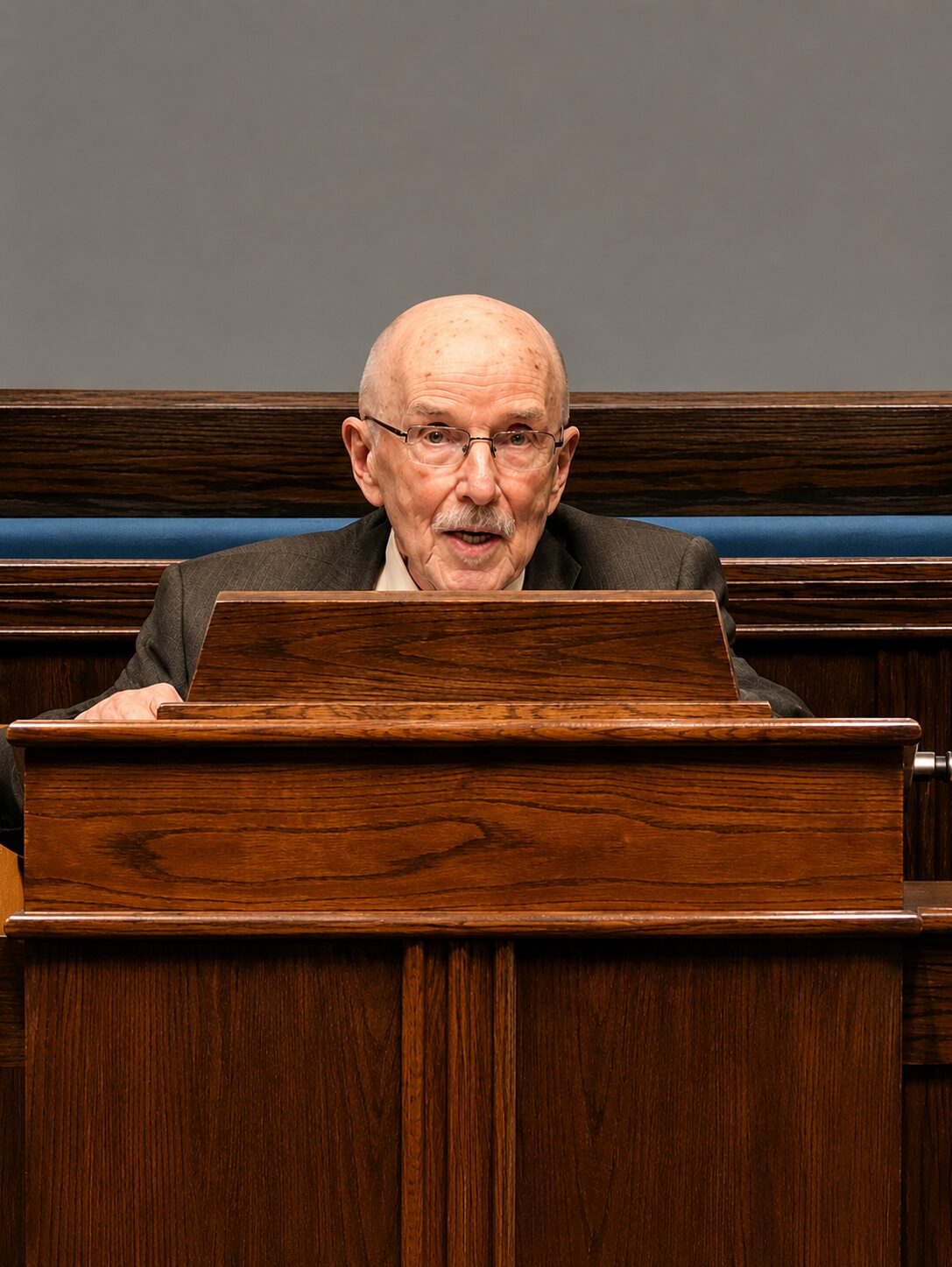
Circa 2003, at the Young Men’s Leadership Camp in Russellville, AL, the venerable Sewell Hall taught something like 100 of us boys the hymn, “A Charge to Keep I Have.” We sang it multiple times a day that week, under Sewell’s careful eye and ear. He was a stickler and we loved him for it. If we lagged behind his hand, always steady as a metronome, he was liable to stop us with a hearty reproof. He wanted us to sing in perfect unity. If we so much as inhaled mid-clause, instead of waiting for a period or a comma, we received a stern rebuke. He wanted us to sing as naturally as we spoke – to sing with understanding. But I have no doubt that what he most wanted to impress on us boys was that we all had “a charge to keep, a God to glorify.”
It is unbelievably easy to forget that divine charge. One of two things can happen: either we start trying to take charge of a lot of other things until the worries of this world and the deceitfulness of riches choke the carrying out of the charge or, perhaps discouraged by previous defeats, we settle into a kind of aimless, morose state of existence unwilling or unable to spur ourselves toward the battle line. The cavalry rides on without us and we hardly notice.
Several hymns have been written about this latter state. In 1978, at the typically tender age of 24, Keith Green had experienced more than most ever will; he wrote these lyrics with which many older Christians can resonate:
My eyes are dry, my faith is old,
My heart is hard, my prayers are cold;
And I know how I ought to be,
Alive to You and dead to me.
Oh, what can be done to an old heart like mine?
The hymn is problematic for congregational singing – ideally, a large percentage of those present will in fact have soft hearts and offer warm prayers and therefore will not be able to sing these words honestly. But invariably, an equally large percentage or even greater is more familiar with the song’s sentiment than they would like. What can be done to an old heart like mine?
The answer in the chorus is to call upon God and obtain His healing forgiveness.
Soften it up with oil and wine.
The oil is You, Your Spirit of love;
Please wash me anew in the wine of Your blood.
This is a beautiful and biblical concept. When we feel broken and lost because of our sin and our failures, what we most need is God’s gracious forgiveness. It doesn’t feel right asking a perfect God to forgive me when I’ve committed the same gross sin for the zillionth time, when I knew better and did it anyway, when I had repented of it so many times before and yet fell right back in the ditch. Wretched man that I am, who will deliver me from this body of death? And yet, God literally begs and pleads us to ask for forgiveness as many times as it takes and to be reunited with Him. We are ambassadors for Christ, as God is pleading through us. We beg you on behalf of Christ, be reconciled to God. Paul wrote those words to Christians!
Receiving God’s forgiveness is a profoundly refreshing and revitalizing experience but with the same breath Jesus says, “Your sins are forgiven” and “Get up… and go.” To serve the present age, my calling to fulfill; O, may it all my pow’rs engage to do my Master’s will! We now arrive at a decision point – do we let our past sin or present inability become an excuse to not do what God is asking us to do or do we accept the terms of the covenant, recognizing that we are not our own for we were bought with a price and say, even with a stammering tongue, “Here am I, send me”?
Once a musical child prodigy pursuing stardom, Keith Green eventually turned to drugs and Eastern religions searching for purpose. In 1975, following a series of Bible studies, he and his wife Melody were baptized. Rather than dwelling on past mistakes, Keith immediately embraced the divine charge. He and Melody began sharing the gospel at the beach and welcomed a young woman fleeing abuse into their home. As they met more people in need, their hospitality quickly expanded. They bought a neighboring home and rented five more, ultimately providing housing and hope for 75 people, including recovering addicts, former prostitutes, and single mothers.
Keith died in a plane crash only 3 years after his baptism. While he had an imperfect doctrinal understanding, one thing was abundantly clear from his life – he knew God had forgiven him through Jesus and that he had a charge to keep – and it is hard to doubt he kept it. Sewell Hall’s efforts in the kingdom of heaven across roughly eight decades have filled entire books and he personally touched the hearts of many thousands of people. These men served their own age, in their own way. But now it is time for us, feeble and frail as we are, to accept the charge of fulfilling God’s calling – will you, dear reader, take charge?